
Stay in the Loop
BSR publishes on a weekly schedule, with an email newsletter every Wednesday and Thursday morning. There’s no paywall, and subscribing is always free.
Book Week recs from the BSR team
The BSR Weekly Arts and Culture Roundup, May 21-27, 2026
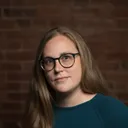 Alaina Johns
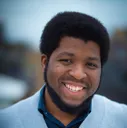 Kyle Hiller
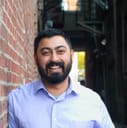 Neil Bardhan

This week is BSR's fourth annual Book Week, and editor-in-chief Alaina Johns, executive director Neil Bardhan, and associate editor Kyle V. Hiller put together a list of their recommended reads. It's perfect for compiling your summer reads list, or if you are looking for something new to get into. So, without much ado, here's what the team has on their shelves. We hope you find something that speaks to you here.
Picks from editor-in-chief Alaina Johns
Hello BSR readers! Thanks for joining our fourth annual Book Week by checking out these recommendations. These are a selection of the best books I’ve read in the last year. And as a bonus just for BSR readers, you can access this document of my mini-reviews for every book I’ve read in the last 18 months. See what I loved … and what I didn’t. See what YOU’RE interested in. I would love to know your recs, as well. Be sure to check out our special lineup of Philly-centric book reviews, too.
Civic Action
Hope in the Dark: Untold Histories, Wild Possibilities, by Rebecca Solnit
An essential read for the MAGA era (and all eras?), Solnit’s book was first published in the early 2000s as a response to the Bush years, and then re-released with new material in 2016. But it feels like it was written for this exact moment, too. She explains why it’d be dumb to give in to the fatalists and doomers. We want progress to be obvious and instant, but the reality is that it just isn’t. Throughout history, important victories have been partial, or glacially slow to accomplish. Success is not always obvious, and it does not arrive all at once, despite popular narratives of civil-rights struggle. I wish everyone would read this book.
Giving Up Is Unforgivable: A Manual for Keeping Democracy, by Joyce Vance
This book is a bracing reminder that giving up on our American project is the only way to guarantee the fascists will prevail. Vance has given us a manual for staying inspired and engaged when the going gets tough, without sparing the truth about our country’s origins. She also walks us through the fundamental levers of power in the US in an interesting, accessible way. Her explanation of how the Supreme Court took on itself the power to review the constitutionality of laws passed by Congress is particularly timely and important to understand. It’s a short book, and super easy to understand.
Feminist Horizons
Entitled: How Male Privilege Hurts Women, by Kate Manne
Honestly, this one sat on my shelf for a long time, not because I’m not interested or because I don’t like Manne (she’s an important feminist thinker and is probably one of a few modern philosophers who successfully crosses from academia to accessible reading), but because the topic feels so heavy for me. I was worried the book would make me rage. And it does, but I’m still glad I got to it. Manne scrapes her way under all the things too many men feel entitled to: love and sex, admiration, bodily autonomy, knowledge, power, and more. A clarifying read.
Clever Girl: Jurassic Park, by Hannah McGregor
If you’re a feminist and a child of the 1990s, just go order this slim green book right now. It’s really fun. It dives into the movie as a lens for the monstrous woman unleashed. I particularly liked McGregor’s exploration of how notions of care and caregiving are tied up with womanhood, and how the film subverts this.
The Right to Sex: Feminism in the 21st Century by Amia Srinivasan
In this relatively short treatise, Srinivasan promises that her topics will not be comfortable, even for those accustomed to deeply feminist spaces, and she lives up to that. She examines topics like “incels” and whether anyone can be entitled to sex, romantic and sexual relationships between teachers and students, “preferences” in romantic and sexual attraction (e.g., refusing to date people of a certain body type, gender, or race), sex work and its economic implications, the difference between morality and moralizing, and lots more. Terrific read: trenchant and substantive.
Memoir
I’m Glad My Mom Died, by Jennette McCurdy
A standout memoir. The hype made me pick this one up, since I didn’t know anything about McCurdy or her TV roles. I’m glad I did. It’s heartbreaking in a lot of ways, but also joyful, as McCurdy finds her way to what she was meant to be all along: a storyteller in charge of her own life.
Praying with Jane Eyre: Reflections on Reading as a Sacred Practice, by Vanessa Zoltan
Zoltan is such an interesting writer and podcaster. She’s a Jewish atheist chaplain who graduated from Harvard’s Divinity School. As someone who tends to be pretty militant about avoiding the trappings of religion because of my own religious trauma and deconstruction, I thought I would be challenged by Zoltan’s “praying” approach. But it opened me up. She dives into Jane Eyre topic by topic, including the novel’s most problematic elements. She demonstrates and illuminates the ways we can practice meaningful moral meditations on any text we choose, regardless of its flaws.
Sociopath: A Memoir, by Patric Gagne, PhD
This 2025 memoir is one of the most interesting books I read recently. Dr. Gagne is a therapist, writer, wife, and mom. She’s also a sociopath. Her story cracks open our assumptions about the mind, arguing that sociopathy is just one natural variation of the human brain, like other less stigmatized neurodivergent qualities. Like any psychiatric diagnosis or neurotype, she argues that sociopathy exists on a spectrum, and the prevailing image of sociopath serial killers is unfair to the vast majority of law-abiding people with this particular quirk of the brain. Her reflections on the manipulations she has faced from so-called “normal” friends and colleagues trying to avoid the pangs of their own conscience are particularly arresting. She urges understanding and therapy, not ostracism.
Actress of a Certain Age: My Twenty-Year Trail to Overnight Success, by Jeff Hiller
Again, I’m not usually one for celeb memoirs, but I loved the HBO show Somebody Somewhere so much that I had to pick this up. This book has a lot of hilarious anecdotes, but more than that, it’s very real about just how hard 99 percent of artists have to work to break through. Hiller has put the work in. And I kind of like the hustle and nerve of capitalizing on a memoir this early in his mainstream career. I hope he writes more.
Know My Name: A Memoir, by Chanel Miller
A difficult read by any measure, but essential. We knew who Miller was—or who we thought she was—long before we knew her name. She’s the survivor of Brock Turner, a man who garnered the sympathy of the international press for raping Miller behind a dumpster while she was unconscious. She tells her story, from the night of the assault and its aftermath to the court case that followed. She digs into her Chinese American heritage and plumbs the depths of our facility for blaming female victims. I picked up the book because the topic is important, and was happy to find great writing, too. (Miller’s mom is a Chinese-language author, so this literary skill makes sense.) And I was surprised to find that an important chunk of the book takes place in Philly. The ending gets a little puffy, and I think this memoir could have been more powerful if it was leaner. I have the sense that Miller will have a lot to say in the future, and we should listen.
Fiction
Woodworking, by Emily St. James
This recent novel is so well-characterized that while I was reading it, I dreamed that I was one of the people in it. The enveloping story follows the prickly, heartfelt, surprising friendship between two trans women at a South Dakota high school in 2016. It's a page-turner that is also deeply felt, challenging, and beautiful.
A Piece of the World, by Christina Baker Kline
I love novels inspired by real-life art. This enveloping story imagines the life of a real person, Anna Christina Olson (1893-1968), who became a friend of the painter Andrew Wyeth when he summered in her coastal Maine hometown. One of his most famous works, Christina’s World, depicts her in a pink dress, lying in the dull grass, yearning strangely toward a gray farmhouse in the distance. Olson had a progressive muscular disability that was not understood in her time. Kline’s novel illuminates her life, based on real sources.
The Guernsey Literary and Potato Peel Pie Society, by Mary Ann Shaffer and Annie Barrows
I picked this up expecting a frothy read about friendship and the love of books, but it was a lot darker than I expected, and why shouldn’t it be? It’s set on Guernsey (an island just off the coast of France) after World War II. It’s an epistolary novel (told via letters, telegrams, and notes) that combines several charming, well-characterized voices. A British journalist travels to Guernsey in 1946 after becoming curious about a book club that operated right under the Nazis’ noses, and becomes deeply involved in their lives. The 2018 film mostly disappointed me, eliminating some of the characters and sanding off most of the story’s darker currents. I desperately want to visit Guernsey now.
Weyward, by Emilia Hart
This beguiling novel takes place at the same location (an English cottage) along three timelines: 1619, 1942, and 2018. Three witchy women connected by blood face the forces that imprison, stifle, and kill us in any century. This book has the perfect mix of realism and magic, and kept me glued til the satisfying end.
The Nickel Boys, by Colson Whitehead
This devastating novel follows a pair of young Black men incarcerated at Nickel Academy, a “reformatory” in Florida based on a real-life mid-20th-century institution rife with racist abuse. There’s a big surprise at the end, and movement toward justice. The story is difficult but necessary. As hard as the many descriptions of abuse are, somehow one of the book’s most terrible moments for me comes within the first several pages, when a young Black man who is anxious to learn is denied that opportunity in a cruelly flippant way. I know this book was adapted into a film, but I don’t know if I’ll be able to watch it.
Picks from executive director Neil Bardhan
Not only does Bardhan serve as BSR’s executive director, among other gigs (everyone at BSR is a part-timer until we can raise more money): he’s parenting a toddler. In other words, his free time these days is minimal. But here are three books at the very top of his stack.
Sharing in the Groove: The Untold Story of the '90s Jam Band Explosion and the Scene That Followed, by Mike Ayers
I caught the jam band bug in the mid-1990s and have enjoyed watching the scene evolve. While my tastes in music stick to the relative mainstream within the genre (specifically The Grateful Dead's family tree and Phish), I'm eager to learn about the geographically local communities and smaller fanbases that have grown organically.
Herding Tigers: Be the Leader That Creative People Need, by Todd Henry
A former coworker suggested this to me as a point of inspiration and guidance right now. Of course, BSR is navigating the usual waves of change and some unusual ones too, but I'm also individually always aiming to grow as a leader and collaborator.
Hands, by Pardeep Toor
This short story collection asks, "What happens when the immigrant experience doesn't work out?" I got my hands (sorry!) on an ARC of this thanks to a mutual friend I have with Toor, and I can't wait to see how different narratives play out. It's been a while since I've focused on a book that's all shorts, and the topic tickles my curiosity.
Picks from associate editor Kyle V. Hiller
For Hiller, the books haven't really been leaving the shelves this year. But with summer right around the corner, the itch to get back to the pile is coming on strong. Here are some of the books that he's got lined up to read this summer, with hopes to add more as the season moves along.
Super Nintendo, by Keza MacDonald
Somewhere in the last few years, I’ve personally found myself feeling disconnected from the art of play. Play had largely become my work in many ways—often the wrong ways, making it difficult to find the fun in various hobbies and activities. One of the beacons for remembering where play comes from has been Super Nintendo by Keza MacDonald, a behind-the-scenes look at the designers that brought you games from franchises like Super Mario, Legend of Zelda, and Pokémon. I’ve actually started this book but haven’t had the time to dive deep, but I’m okay with taking it slow. This book isn’t just about the making of the games, but where their inspirations came from and how a group of curious programmers at the frontier of a new art form in the mid-1980s and early 1990s came together and extracted magic from their everyday world. Whether it was exploring creeks, woodsy areas, and caves in the Japanese countryside or seeing a pipe at a construction site on the way to work and wondering what kind of world could exist on the other side, the book has thoroughly reminded me, in just a few early chapters, how to cultivate play through the mundane, and then making something to share with not just the world, but with your friends, family, and colleagues.
Coming Home, by Brittney Griner and Michelle Buford
Since the USA verses France Olympics final in Paris 2024, I’ve fallen in love with women’s basketball. I was there at the Unrivaled basketball games in Philly this winter—a record- and groundbreaking event for women’s sports as a whole. I watch most of the games, and I’m a fan of (mostly) all the players. One of them is Brittney Griner, and I’m looking to check out her memoir recounting her devastating, tragic experience when she was arrested and detained in Russia for mistakenly carrying under one gram of medically prescribed hash oil. I’m a bit nervous about opening this one, though. I know her story is harrowing, and I’m not sure how much I’ll be able to handle. For the light-of-heart, there is a young adult adaptation.
The Elsewhere Express, by Samantha Sotto Yambao
I have a confession to make. Before The Gifted Society, a novel by a friend of mine who I’d helped edit, I hadn’t leisurely read fiction since 2018. The Elsewhere Express is going to be dipping my toes back into novels. It tells the story of Raya, a living lost soul who has boarded the magical Elsewhere Express, a train full of wonders that also harbors secrets and danger. We’ll see how it goes!
I Deliver Parcels in Beijing, by Hu AnYan
In the 2023 sensation that took over China and was translated and brought to the West in 2025, Hu AnYan tells all about his experiences in short-term jobs across various cities during Covid-19 lockdowns. The work sounds awful, but it’s met with a sense of levity that I think I’m looking for in most things I engage with these days. Yes, it’s brutal out here, but where’s the light? A sense of humor can beget clarity in major ways. Also, I carry an odd sense of nostalgia for those lockdowns, and there has been enough distance for me to actively revisit that time, especially outside of my own experiences.
Thanks for engaging with our 2026 BSR Book Week! If you’re looking for a good read, be sure to check out our other book reviews, taking over the BSR site from May 17-23, 2026. On Monday, May 25, we return to our regular mix of covering theater, opera, music, visual art, dance, books, films, public events, and more. Subscribe to our weekly newsletters (never a paywall!), and you can support our independent nonprofit arts journalism with a gift of any size.
Sign up for our newsletter
All of the week's new articles, all in one place. Sign up for the free weekly BSR newsletters, and don't miss a conversation.


