
Stay in the Loop
BSR publishes on a weekly schedule, with an email newsletter every Wednesday and Thursday morning. There’s no paywall, and subscribing is always free.
Reflections on the deaf community
Previewing Sara Nović’s Mother Tongue
 Kiran Pandey
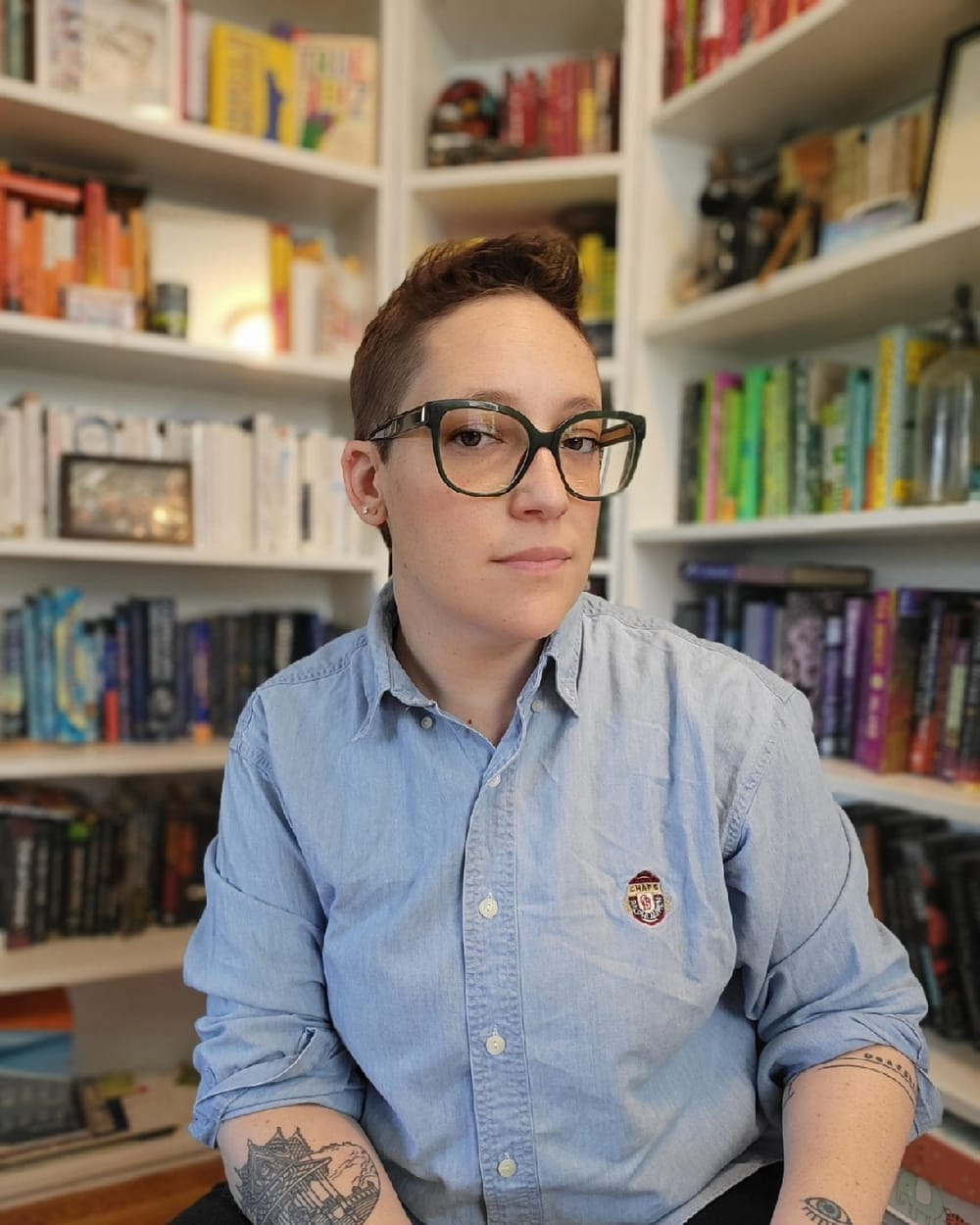
Sara Nović, a Philadelphia-based author and deaf rights activist, made waves with her novels Girl at War (2015) and True Biz (2022), the former a winner of the American Library Association’s Alex Award and a finalist for the Los Angeles Times Book Prize. Her latest book, Mother Tongue, turns her talents to nonfiction: a reflection on the deaf community that traverses memoir, history, and cultural commentary.
Deaf perspectives
Out this month from Penguin Random House, Mother Tongue began as a letter to her two sons: one deaf, one a hearing CODA (Child of a Deaf Adult). Nović, who is herself deaf, realized that she couldn’t write about her personal story without its broader contexts. Pulling on one thread invoked its thorny connections—the Christian right, international adoption, the history of oppression against the deaf community—and provided the scope of the finished book.
“As I wrote, I realized the inextricability of this one part of my identity, and theirs, from all the other parts, and the impossibility of parsing ourselves out into discreet boxes,” explained Nović. “So the project expanded to examine the intersections of those selves through race, religion, queerness, and adoption.”
Nović previously explored the deaf community in her novel True Biz, which follows two deaf students and a hearing headmistress at the fictional River Valley School for the Deaf. One of the story’s strengths is its variety of deaf perspectives: those of generationally deaf students, students with cochlear implants, Black deaf students and teachers, and more. “To my mind, that’s the best part of the deaf community in real life, too,” said Nović. “We’re all from different places and backgrounds, but we can come together and be at home in ASL.”
“Mother Tongue, in some ways, is a much narrower point of view, because it is only my experience,” continued Nović. “However, working in nonfiction allowed me to share more of the copious amounts of research I tend to do for every book, so in that way, other folks’ voices are still in the memoir, too.” To that end, Nović has shared clickable endnotes on her website, citing the multiplicity of voices that informed her own.
While Mother Tongue navigates complex histories, it ultimately offers a journey of hope—one that is rooted in Nović’s parenthood, in the ways she raises her sons within the deaf world and in the ways they grow beyond her.
“Being with my kids and their friends gives me so much hope—they are so much more flexible in their understanding of humanity, of ‘normalcy,’ of what it means to be at home in their bodies,” said Nović. “They are adept at code-switching, but still take pride in their differences rather than using that skill set as a way to mask or pass. The kids are alright, and even though we are handing them a profoundly messed up world, I look forward to seeing them come into their own, and working with them to try and make it better.”
At top: Sara Nović’s new memoir Mother Tongue debuted May 5, 2026. (Photo by Zachary Stone.)
Thanks for reading BSR! If you enjoyed this preview, be sure to subscribe to our free newsletter and don’t miss the next one. There’s never a paywall at BSR, and you can join the donors who keep our journalism accessible.
What, When, Where
Mother Tongue. By Sara Nović. New York: Penguin Random House, 2026. 272 pages, hardcover; $29. Get it here.
Sign up for our newsletter
All of the week's new articles, all in one place. Sign up for the free weekly BSR newsletters, and don't miss a conversation.


