
Stay in the Loop
BSR publishes on a weekly schedule, with an email newsletter every Wednesday and Thursday morning. There’s no paywall, and subscribing is always free.
A Philly physician-turned-author explores the HIV/AIDS epidemic in China
And the Ancestors Sing, by Radha Lin Chaddah
 Krista Mar

And the Ancestors Sing, a sweeping, multigenerational historical fiction novel set in post-Cultural Revolution China (late 1970s to early 1990s), follows two women. Lei is sold at a bride price of two packs of cigarettes and some eggs into an unhappy marriage. Lulu is a hopeful migrant who seeks better fortunes in Shanghai. After being denied a factory job, she becomes a sex worker to support her family back home. Both women strive to better the situations for their families despite facing enormous barriers.
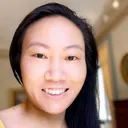
Author Radha Lin Chaddah, who now lives in Philadelphia, spent a decade in China, where she worked as a primary care physician and wrote the book HIV/AIDS: Beyond the Numbers for China's Center for Disease Control and Prevention. In her debut novel, she contrasts her two protagonists with Farmer Master, the wealthy landowner of Da Long Village, who controls the land and the wages of the villagers who work the fields. His family is able to weather the shifting political and climate landscape, unlike the working class whose fates and lives are deeply affected by seismic changes.
A difficult format
And the Ancestors Sing is entirely written in third person and includes abrupt time and point-of-view jumps. This has a disorientating effect, especially early on in the novel. While nonlinear narratives can work, additional context of when and where the narrative is jumping to (e.g., Lei, Da Long Village, 1986) would’ve made the novel much easier to follow. These jumps make the pacing slow in the beginning, as finding your bearings takes a mental toll.
This is Chaddah’s first foray into fiction, and the story lacks sufficient emotional depth or character growth, reducing the reader’s emotional investment. In Lei’s case, she feels like a trope of a hard-working maternal figure with no hopes or desires of her own; she does everything for the betterment of her family without a personal arc of her own. A lot of the side characters feel like avenues to explore different forms of suffering, which makes investment into their storylines hard as well.
The plasma economy
The most compelling part of the novel is the exploration of the plasma economy and the HIV/AIDS epidemic in China in the 1990s. This is part of Chaddah’s research in her role as a physician and public-health professional. The plasma economy took off in the 1980s in China as demand for blood in urban areas skyrocketed. The blood donation system was monetarily driven, with plasma sellers preying on the poor—both urban migrants and the rural poor. Plasma was extracted from the blood of multiple donors and pooled together with those of the same blood type. After the plasma was extracted, the pooled blood was returned to the donors, so more frequent donations could be made. Due to unsafe practices, it is estimated that at least 40 percent of blood donors contracted HIV. Known as the “love disease” in the novel due to its prevalence in sex workers and migrants, there was a social stigma and lack of education around the disease that led to a high death rate.
Hope as a rare commodity
Chaddah provides a humanizing view of sex work. Lulu’s work is not glorified or overly sensationalized, just treated with the same grim reality and harshness as farming and other forms of low-paying jobs. Chaddah’s exploration of mental health issues and neurodivergence in her characters is also a highlight. Mental illnesses cause strife in characters’ lives and the lives of those who love them due to the lack of awareness and lack of humane treatment options. The harsh reality of the stigmatization and criminalization of mental health is sobering.
Despite the many sacrifices of the working class for the next generation depicted in the novel, it often feels like there are more setbacks than gains. Hope is a rare commodity. While And the Ancestor Sing is a mixed bag for me, I am hopeful for future works by Chaddah. I would recommend this book to folks who like historical fiction, multigenerational novels, or who want to learn more about the HIV/AIDS epidemic in China.
Thanks for engaging with our 2026 BSR Book Week! If you’re looking for a good read, be sure to check out our other book reviews, taking over the BSR site from May 17-23, 2026. On Monday, May 25, we return to our regular mix of covering theater, opera, music, visual art, dance, books, films, public events, and more. Subscribe to our weekly newsletters (never a paywall!), and you can support our independent nonprofit arts journalism with a gift of any size.
What, When, Where
And the Ancestors Sing. By Radha Lin Chaddah. Toronto: Rising Action Publishing, February 3, 2026. 432 pages, paperback; $18.99. Get it here.
Sign up for our newsletter
All of the week's new articles, all in one place. Sign up for the free weekly BSR newsletters, and don't miss a conversation.


